
Since UK referendum outcome to exit European Union last Friday, 32 companies have hit record highs.

10 high dividend paying stocks across sectors that are expected to maintain or even increase their pay-outs in FY23 thanks to faster earnings growth in the last four quarters.

Banks and oil companies are in discussions as to who should bear these charges, it said a day after averting a crisis that would have hit millions of people as oil pump owners threatened to stop taking card payments.

The government's decision to raise fuel prices in June has scuttled the oil companies' plans to reduce their losses from retail fuel sales as consumers are buying less of premium fuels, which is more expensive than normal fuels.

The Reserve Bank has taken some steps to shore up the domestic currency.

IT services company's CEO outlined an ambitious three-year roadmap to accelerate revenue growth and lift margins.
For instance, an oil marketing company availed of a short-term credit facility of Rs 500 crore (Rs 5 billion) from a public sector bank at less than 7 per cent. Non-banking finance companies, which were finding it difficult to raise resources from banks, can now avail of loans at 10.5-11 per cent as against 14-15 per cent in November.

One of the reasons is that the retail prices are not bench-marked to crude but their respective international benchmark prices.
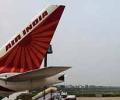
"Air India is unable to pay even after a 90-day credit period. They owe us about Rs 300 crore without interest. There is also no bank guarantee from Air India to any of the oil marketing companies. We do not know when will the company honour its dues," said a BPCL official on condition of anonymity.
Oil Minister Murli Deora has said that petrol and diesel prices would not be cut till crude oil prices fell to $67 a barrel, since the depreciation in the rupee against the US dollar had eroded gains from falling oil prices, which touched a 7-month low.

Why does the world's fastest-growing major consumer of energy fail to attract investments in oil and gas? This is a question worth pondering after private sector conglomerate Reliance Industries Ltd (RIL) failed to close a $15-billion downstream asset deal with Saudi Arabia's national oil company, Aramco. It's understandable if multi-billion dollar investments in oil and gas projects or deals involving state companies that need to traverse a complex bureaucracy at state and federal levels and the corridors of ministries unravel. However, Mukesh Ambani-run RIL, India's most successful energy company, is not typically known to fumble on closing deals (Ambani closed deals worth around Rs 2 trillion early last year in telecom and retail with blue chip investors).

The petroleum ministry has asked for a total compensation of Rs 60,000 crore (Rs 600 billion) to cover the subsidy portion till the third quarter of the current financial year.

Petrol prices have been cut in small doses on 20 occasions.

'If you compare the data from 2017 and 2023 of the US imports from the world and China, you will see that the US was a complete loser in the trade war, and China was a complete gainer.'

Among the 30 Sensex companies, Reliance Industries, Bharti Airtel, UltraTech Cement, Sun Pharma, Adani Ports, Axis Bank, NTPC and Bajaj Finance were the biggest gainers. Mahindra & Mahindra, Tata Steel, Tech Mahindra and JSW Steel were among the laggards.

Benchmark indices Sensex and Nifty pared early gains to close marginally lower in highly volatile trade on Thursday due to losses in Larsen & Toubro and cautious trading ahead of the release of domestic inflation data. The 30-share BSE Sensex declined 35.68 points or 0.06 per cent to settle at 61,904.52 after hitting the crucial 62,000 mark in opening deals. During the day, it hit a low of 61,823.07 and a high of 62,168.22.
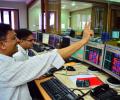
From the Sensex basket, Bajaj Finance, Mahindra & Mahindra, HDFC Bank, JSW Steel, Maruti, Wipro, Bharti Airtel, Bajaj Finserv, ICICI Bank and ITC were the major gainers. Nestle India, HCL Technologies, Larsen & Toubro, Tata Consultancy Services, Tata Motors and Infosys were among the laggards.

Adani Wilmar (AWL) joined the elite group of companies with market capitalisation (m-cap) of Rs 1 trillion after the stock of Gautam Adani-led edible oil company hit a new high of Rs 802.80, up 5 per cent on the BSE in Tuesday's trade.

Larsen & Toubro, Axis Bank, Reliance Industries, UltraTech Cement, Mahindra & Mahindra, IndusInd Bank, ICICI Bank and Tata Steel were the other big gainers. Sun Pharma, HCL Technologies, Asian Paints, Nestle and Infosys were the laggards.
